- English
- Español
- Português
- русский
- Français
- 日本語
- Deutsch
- tiếng Việt
- Italiano
- Nederlands
- ภาษาไทย
- Polski
- 한국어
- Svenska
- magyar
- Malay
- বাংলা ভাষার
- Dansk
- Suomi
- हिन्दी
- Pilipino
- Türkçe
- Gaeilge
- العربية
- Indonesia
- Norsk
- تمل
- český
- ελληνικά
- український
- Javanese
- فارسی
- தமிழ்
- తెలుగు
- नेपाली
- Burmese
- български
- ລາວ
- Latine
- Қазақша
- Euskal
- Azərbaycan
- Slovenský jazyk
- Македонски
- Lietuvos
- Eesti Keel
- Română
- Slovenski
- मराठी
- Srpski језик

What Happens When a Door Disappears?
What Happens When a Door Disappears?From a designer’s exclusive tool to a mainstream architectural element, the minimalist sliding door is reshaping how we experience space.
When the design philosophy of “less is more” meets the pinnacle of modern engineering, an almost “invisible” architectural element is quietly transforming our living and working environments. The Extremely Simple Glass Sliding Door, with its minimalist lines, unobstructed views, and ability to seamlessly connect interiors with exteriors, has evolved from a high-end architectural signature into a global design phenomenon.
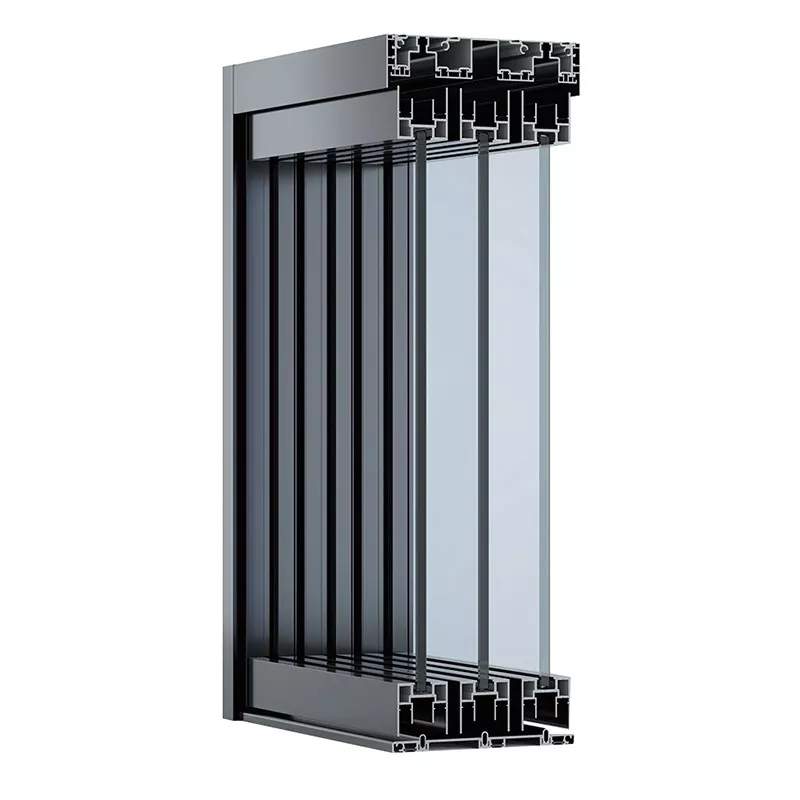
A Design Revolution: When a Door is No Longer Just a Door
Traditional sliding doors often conjure images of bulky frames, prominent tracks, and a heavy visual presence. The logic behind the Extremely Simple Glass Sliding Door is the complete opposite: to make the door disappear.
| Design Element | Traditional Sliding Door | Minimalist Glass Sliding Door |
|---|---|---|
| Frame Width | 60-100mm | 12-40mm |
| Glass-to-Frame Ratio | Approx. 60-70% | 85-92% |
| Visual Effect | Divides space | Merges and expands space |
| Design Presence | Strong and dominant | Nearly invisible |
This extreme reduction in frame width makes the glass the visual protagonist, relegating the frame to a purely functional support role. As many architects have noted, the ultimate goal of the minimalist sliding door is to make the occupant forget the door exists, allowing them to experience only the space itself.
The design world has recently seen a significant shift toward de-boundarization. Whether in flagship retail stores, high-end residential living rooms, or corporate meeting rooms, designers are pursuing three key objectives: blending indoor and outdoor spaces, maximizing natural light, and achieving visual purity. The ultra-narrow frame allows outdoor landscapes to “flow” into the interior, erasing the boundaries between the building and its environment. Less metal obstruction means more sunlight penetrates the space, reducing reliance on artificial lighting. The clean, simple lines perfectly complement modern architectural styles, creating a calm and sophisticated spatial atmosphere.
The Engineering Marvel Behind the Minimalist Aesthetic
A minimalist frame may seem simple, but achieving it requires solving a host of complex engineering challenges. The narrower the frame, the higher the demands on materials and structural integrity.
The load-bearing structure must be hidden from view. Traditional doors rely on wide frames for strength, but minimalist doors conceal this function within the floor and ceiling tracks. High-precision stainless steel tracks, which bear the full weight of the door, can be as low as 15mm in height, creating a nearly threshold-free passage. This is combined with high-strength aluminum alloy profiles (such as aerospace-grade 6063-T5) that maintain wind pressure resistance and structural integrity despite using less material. A multi-point locking system is also discreetly integrated to ensure stable closure and optimal sealing when the door is shut.
The rise of the minimalist sliding door is also inseparable from advancements in glass manufacturing. To guarantee safety and performance with a narrow frame, the industry now commonly uses double or triple-pane tempered glass with a total thickness of 24-32mm, providing insulation, soundproofing, and safety. Low-E coatings are applied to reflect infrared radiation, keeping interiors cool in summer and warm in winter. For high-rise buildings or hurricane-prone areas, laminated glass options are available to maintain structural integrity even if shattered.
Furthermore, the silky-smooth operation of these doors comes from a precision-engineered hardware system. It features a quiet pulley system with high-performance composite wheels and precision bearings, reducing operational noise to below 20 decibels, comparable to a whisper. An anti-derailment design ensures the door remains on track even when subjected to significant force. A hydraulic dampening system is also integrated, providing a soft, self-closing function that prevents slamming and reduces the risk of pinched fingers.
From Luxury Villas to Everyday Spaces: Diverse Applications
In the past, ultra-narrow sliding doors were primarily found in high-end villas and luxury commercial projects due to their high technical threshold. However, as manufacturing processes have matured and supply chains have improved, these doors are rapidly entering ordinary homes, small retail stores, and office spaces.
| Application Scenario | Specific Usage |
|---|---|
| Residential Spaces | Connecting living rooms to balconies (maximizes space), kitchen/dining room partitions, wardrobe doors, and study room dividers. |
| Commercial Spaces | Brand flagship storefronts, restaurant terraces, office meeting rooms, and art gallery display partitions. |
In residential settings, the most common use is connecting the living room to the balcony. When fully opened, the two areas merge, giving even small apartments the feel of a spacious open-plan loft. In commercial spaces, full-height glass facades with sliding doors create an open, inviting atmosphere for retail and dining, removing barriers between the customer and the business.
Professional Installation: The Critical "Second Half"
The beauty and performance of a Extremely Simple Glass Sliding Door rely heavily on the quality of its installation. The narrower the frame, the higher the precision required.
Crucial installation points include precise measurement of the door opening (with an error margin of less than ±2mm), ensuring the track is perfectly level, and assessing the load-bearing capacity of the supporting wall or steel structure. Proper sealing between the frame and the wall with professional sealant is essential to guarantee airtightness and water resistance. Finally, a meticulous post-installation adjustment of all hardware components is crucial for smooth and safe operation.
Expert Note: It is highly recommended to avoid DIY installation for these products. Even for experienced homeowners, professional assistance is strongly advised for securing the tracks and hanging the heavy glass panels.
Maintenance for Longevity
The minimalist design, which lacks unnecessary decorative parts, actually simplifies daily maintenance. Regular cleaning of the track with a vacuum and brush is essential for smooth operation. Glass surfaces should be cleaned with a neutral glass cleaner and a soft cloth. Hardware, including wheels and seals, should be checked periodically for wear or unusual noise.
Conclusion: Minimalist, But Not Simple
The popularity of the Extremely Simple Glass Sliding Door reflects a core contemporary desire: to achieve visual purity and spatial freedom in a complex world.
It may appear “simple,” but it represents a synthesis of material science, structural engineering, and precision manufacturing. Its narrow frame embodies the pursuit of a high-quality lifestyle. When a door can achieve minimal visual impact while delivering maximum functionality, it transcends its role as a simple building component, becoming a poetic medium that connects people to their space and the world beyond